
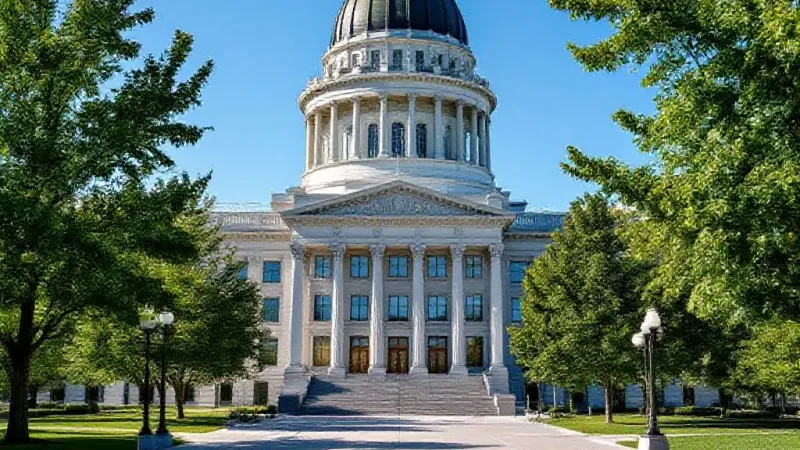
The U.S. Department of Justice has sued Utah, along with the District of Columbia and two other states, for granting in-state college tuition and scholarships to immigrants without permanent legal status. The lawsuit, filed in federal court in Utah on Thursday, names the state, the Utah System of Higher Education, and its commissioner, Geoffrey Landward, as defendants. This action is part of a broader push by the Trump administration to end such policies nationwide, which the department's attorneys argue discriminate against U.S. citizens from out of state.
The Department of Justice stated in a news release that these new cases bring the total number of lawsuits against states allowing resident tuition for unauthorized immigrants to 25. Earlier this week, the department secured a victory when a federal judge in Kansas ruled that state’s tuition law unconstitutional. Stanley Woodward Jr., associate U.S. attorney general, commented on the department's stance, stating, "No more placing illegal aliens over American citizens." These legal actions follow a 2025 executive order from President Donald Trump, which directed the Department of Justice and the U.S. Department of Homeland Security to address state policies granting resident tuition to immigrants without legal authorization.
Utah currently allows in-state tuition for students who have attended high school in the state for at least three years and graduated in Utah. Proponents of this policy argue that it does not alter academic requirements and enables students to pay the same tuition rates as the classmates they grew up with. This year, a legislative proposal aimed at ending this benefit in Utah passed the House by a narrow margin but did not advance to a vote or secure a sponsor in the Senate. Opponents of the proposal expressed concerns that it could make college unaffordable for students who have lived most of their lives in Utah. State lawmakers are expected to continue debating this issue into the next year.
Utah House Speaker Mike Schultz (R-Hooper) addressed the question of who taxpayer money should serve, stating in a Friday statement to Utah News Dispatch, "Utah taxpayers should not be footing the bill for benefits extended to individuals who are here illegally. Our taxpayer dollars should prioritize Utah citizens." Schultz, who voted in favor of the 2026 measure to end the benefit, added that "The Legislature has a responsibility to protect Utah taxpayers and make sure state resources are being used as intended." He indicated his anticipation of addressing the issue and making "necessary changes" during the 2027 General Session.
Senate President Stuart Adams stated Friday that he and his Senate colleagues were reviewing the lawsuit. Adams seemed to reference principles of Utah’s moderate 2010 immigration compact while reflecting on the state’s next steps, though he did not specify what those steps might entail. In a prepared statement, Adams said, "Utah has long valued those who come to this country legally, strengthen our communities and contribute to our economy. But taxpayer-funded benefits should prioritize those they are intended to serve." He affirmed the Senate's commitment to "protecting Utah taxpayers, respecting those who follow the legal immigration process and ensuring Utah law is fair, lawful and consistent with federal requirements."
The Utah System of Higher Education, in an unsigned statement to Utah News Dispatch, stated that "we support students who meet the eligibility requirements established in state law and defer to the Utah Legislature’s authority to set tuition policy for our public colleges and universities. We will continue to administer that in accordance with legislative direction." Utah Attorney General Derek Brown declined to comment on the pending litigation through a spokesperson.
Advocates, however, condemned the lawsuit. Thomas Saenz, president of the Los Angeles-based Mexican American Legal Defense and Educational Fund, called the action "shameful" in a Friday statement. Saenz described the lawsuit as "unprecedented and unwarranted," noting that "No administration of either party has ever previously challenged these state tuition-equity laws."
According to the Pew Research Center, an estimated 140,000 unauthorized immigrants resided in Utah as of 2023, at a time when Utah’s total population was approximately 3.4 million. The number of college-aged individuals among this group was not clear. The financial implications of in-state versus non-resident tuition are significant; for the current academic year, estimated in-state tuition and fees at the University of Utah are $10,480, while non-resident tuition is $32,932. The exact cost can vary based on a student’s specific program and coursework.