
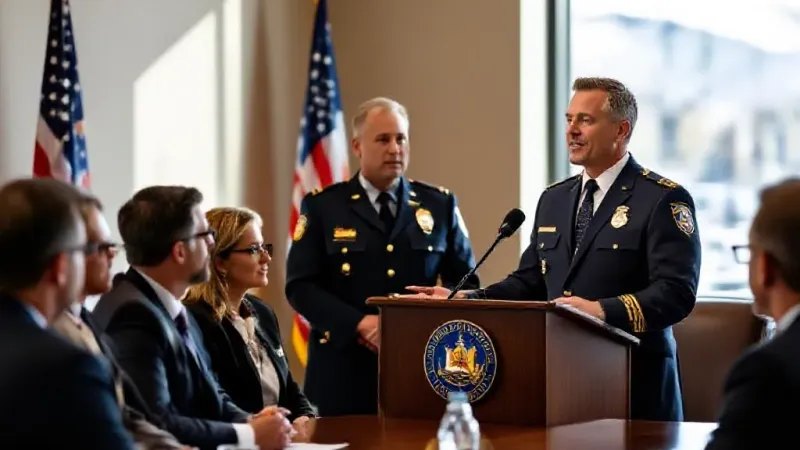
Utah is stepping up its efforts to investigate scams and connect disparate cases with the launch of a new Financial Crimes Intelligence Center (FCIC) within the Utah attorney general’s office. State leaders announced Monday that this hub is the second of its kind in the nation, designed to create a new line of defense against increasingly sophisticated operations, including those that use artificial intelligence, according to Utah Attorney General Derek Brown.
Attorney General Brown told reporters that financial crimes are a growing problem, with Utahns losing $108 million last year and almost $60 million so far this year. He explained that once someone is scammed, a bank typically flags the issue, a police department opens a case, and a hotline fields a call from the victim seeking assistance. "But ultimately, none of these organizations are talking with each other," Brown said. This lack of communication makes it difficult to ascertain if individual incidents are part of a larger, organized crime ring, creating a "gap" that the FCIC aims to address.
Utah lawmakers supported the establishment of the center this year, committing $1.7 million in yearly funding. Senate Majority Leader Kirk Cullimore, R-Sandy, who sponsored the budget request, noted that the initiative aligns with the Legislature’s recent actions to protect digital identity. At Monday’s news conference at the state Capitol, Cullimore stated that he believes the center "will signal that we are not the place to commit financial crimes."
State officials consulted with law enforcement in Texas, which operates a similar state fraud intelligence center, while developing the plan for the Utah center, Attorney General Brown said after the news conference. The Utah team's goal is to aggregate enough information to recognize patterns in fraudulent activity. Brown indicated that artificial intelligence would be utilized to achieve this, noting, "AI is going to help us do that as well," though he added that this component is still taking shape.
The FCIC's staff includes two prosecutors, two investigators, a forensic accountant, an analyst, and a paralegal. These employees report to a division director in the attorney general’s office who oversees mortgage and financial fraud cases, according to Attorney General Brown. A top Utah law enforcer is also holding meetings with seniors across the state to address elder fraud, a key area of focus.
Attorney General Brown and Senate Majority Leader Cullimore, speaking alongside representatives from banking and credit union associations at the news conference, encouraged Utahns who become victims of fraud not to feel ashamed. Cullimore shared an experience from within the last week where someone in his household inadvertently provided credit card information to a fake website. Attorney General Brown recounted how an attorney friend lost millions to a sophisticated real estate scam. Brown emphasized the importance of reporting incidents, explaining that a $30,000 fraud in Cache County and a similar incident in Washington County "may actually be connected," and the FCIC's role is to identify such connections.
Howard Headlee, president of the Utah Bankers Association, underscored the importance of filing a report immediately so investigators can begin their work, stating, "In these cases, time is of the essence. Time is critical." Attorney General Brown plans to measure the program's success partly by the amount of money returned to victims following judges' restitution orders. He also acknowledged the difficulty in quantifying how many people are prevented from becoming victims due to heightened prevention and awareness efforts. Residents can report fraud to the center through its website.