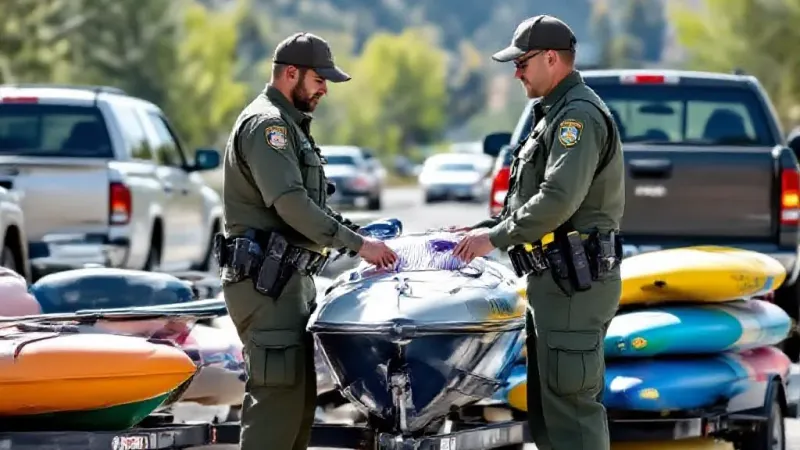
Utah state agencies inspected over 9,000 boats, kayaks, paddleboards, and other watercraft during the Labor Day weekend, from Friday to Monday, as part of ongoing efforts to prevent the spread of harmful invasive species. The inspections aim to keep organisms such as quagga mussels and Eurasian watermilfoil from moving between Utah's vital water bodies, which are crucial for recreation, drinking water, and irrigation.
According to a news release, a total of 9,418 watercraft underwent inspection. Of these, 440 inspections were conducted at Lake Powell, which is currently the only area in Utah experiencing a quagga mussel outbreak. Throughout the weekend, 154 watercraft required decontamination to remove potential invasive threats.
Invasive species technicians from various agencies collaborated on these preventative measures. Personnel from the Utah Department of Natural Resources (DNR), Utah Division of Wildlife Resources, Utah State Parks, the Arizona Game and Fish Department, and the National Park Service performed inspections across more than 40 stations statewide.
The spread of invasive species poses significant threats to Utah's environment and infrastructure. Quagga mussels, for instance, can quickly spread to water lines, causing them to clog and costing millions of dollars for removal. They also damage boat engines and disrupt aquatic ecosystems by removing plankton, which are a critical food source for fish.
Eurasian watermilfoil presents another danger, forming thick mats that block sunlight. This process harms native plants and fish populations by altering their habitat and food sources. The plant can also clog irrigation systems, impacting agriculture, and tangle around boat propellers, affecting recreational activities.
Concerns about invasive species are growing with new detections. New testing revealed DNA from invasive zebra mussels for the first time in the Colorado River near Moab, raising concerns for Utah officials. Additionally, in neighboring Idaho, quagga mussels have been found in the Snake River for a fourth consecutive year, highlighting the persistent regional challenge.
During their inspections, DNR officials documented various violations of Utah law designed to prevent the spread of invasive species, according to the news release. These violations primarily stemmed from boaters who had not completed the state’s mandatory mussel-aware boater program course, failed to pay the required aquatic invasive species fee, or neglected to remove drain plugs while transporting their watercraft.
Residents seeking further information about invasive species, including a list of decontamination stations around the state and requirements for watercraft, can find resources on Utah’s STD of the Sea website.