
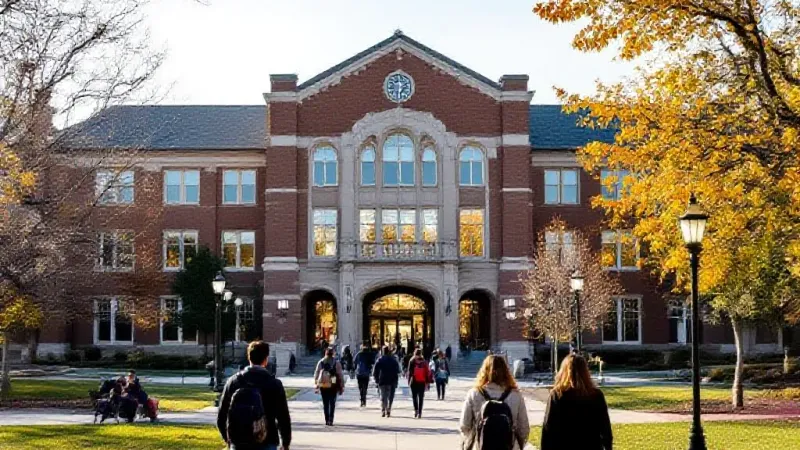
The University of Utah is planning to lay off between 285 and 855 staffers over the next year as part of a “modernization effort,” the state’s flagship university revealed Tuesday. These planned cuts represent 5% to 15% of the university’s workforce and will exclude faculty and healthcare staff, according to information shared in a university blog post. The roles slated for reduction are expected to be either consolidated, simplified, or eliminated. The university's healthcare units will undergo a “parallel path in coordination with the broader university effort,” the post added.
Rebecca Walsh, a spokesperson for the University of Utah, confirmed in an email that the staff cuts will impact positions in several key administrative areas. These include the Office of Advancement, human resources and finance departments, information technology, marketing and communications, and various administrative support roles. Ms. Walsh also stated that “impacted staff will have the opportunity to apply for new and redefined positions.”
University leaders have emphasized that efforts will be made to support employees through the transition. Jeff Herring, the chief human resources officer, noted in the university's blog post that some positions would be cut through normal attrition and retirement, though other roles may be directly eliminated. Mr. Herring acknowledged the human element of these changes, stating, "Uncertainty about job changes and organizational structure creates deeply personal questions for employees and their families." He further assured that the teams involved are moving “quickly and thoughtfully” to meet modernization goals while recognizing employees as the university’s greatest asset, promising support for anyone impacted.
University President Taylor Randall commented on the initiative, stating that “The University of Utah has never become stronger by standing still.” He emphasized the responsibility of stewardship, noting an obligation to leave the university stronger for future generations.
The primary aim of this “modernization” project, according to the university’s blog post, is to free up resources for increased investment in the school’s core missions: education, research, and patient care. While some jobs are being cut, the initiative is also anticipated to potentially lead to more faculty positions, higher faculty salaries, additional research support, and the continued development of a more fully residential campus.
University leaders cited several challenges driving this strategic shift. These include a nationwide decline in public trust in higher education institutions, federal cuts to research funding, and a continuous push from Utah leaders to reduce costs and implement reinvestment plans at state universities. The institution is also preparing for significant demographic changes in the state, with projections indicating a decline in the college-aged population over multiple years beginning in 2032.
The university’s financial outlook also plays a role in these decisions. While the University of Utah “remains financially strong,” maintaining healthy operating margins is critical for its ability to invest in faculty, students, research, facilities, and other strategic priorities, the university stated in its blog post. The institution noted that its expenses are currently growing faster than revenues, a “trajectory that is not sustainable over the long term.”
This move also coincides with changes to the university’s retirement benefits contribution formula, which is shifting from 14.2% to 6%, alongside a 4% contribution match for newly hired personnel.
Discussions regarding these latest staff reductions have been ongoing. Ms. Walsh confirmed that the topic was discussed with deans and department chairs on various days in August. Impacted staff have been part of ongoing discussions since August 24. The university’s new financial goals have been in development since late 2025, with previous actions including the centralization of staff in its philanthropic support office and the consolidation of its liberal arts and science colleges earlier this spring.